Footsteps - Jotaro's Travels
TEMPLE OF THE EAST SEA DRAGON KING
(東海龍王寺)
Teluk Intan, Perak, Malaysia - September 2014
While staying at the D'Hotel in Teluk Intan during a bike-packing trip from Ipoh to Teluk Itan, I espied from the hotel's rear window a nice Chinese temple with colourful dragons.
Temples have always drawn me - the architecture of their roofs and the artwork inside never fail to mesmerise me. That peek had intrigued me, I had to have a closer look at this one!
This is the Tong Hoi Loong Wong Temple (loosely translated - the Temple Of The Eastern Sea Dragon King). It is a Chinese temple that stands majestically on a raised platform overlooking the Perak River, it is dedicated to Tong Hoi Loong Wong (Dragon King Of the East Sea). It's a fairly new temple, just about three years old - it's paintwork still bright, it's wall still clean and yet to be aged by moss.
A dramatic view of the temple, the silhouettes of the roof dragons clearly etched against the bright sky behind. It's a single storey temple with two viewing towers at the front. I guess from these towers there should be a fantastic view of the Perak River; we did not go up as we were a bit short on time.
Before we go in to the main temple, let's have a look at a couple of small structures at the compound. The above is one for burning offerings, built like a small pagoda it has a two-tiered roof with a small stupa at the apex.
Next to this is a small shrine. Seeing that there are fishes on the roof top makes me wonder whether this shrine is dedicated to the River Gods He-Bo; and Da-Yu?
A closer look at the roof, at the top two fishes guard a red moon.
A close-up of the top ridge of the roof shows the fine craftsmanship that has been put into the statues and floral painting.
Sitting on the hip's edge is a stylized sea-dragon. What I like about these roof dragons is that they are multi-coloured and their design differ from that of other temples.
INSIDE THE TEMPLE
Two set of steps lead up to the main temple platform. Like many Chinese temples there is a slanting carved panel in between them; but unlike most temple where such panels have a only couple of dragons, this one have many dragons and in the centre of them all is a bigger dragon. This must be the Dragon King of the Eastern Sea.
THE FOYER SECTION
Like a Chinese house, the temple is divided into two sections, a outer foyer section and a inner main prayer hall section.
The outer foyer is about twenty feet wide and has a secondary altar with a large urn in front. Offerings are made at the altar and joss sticks placed into the urn. A step up into this section prevents rain water from flowing in. Devotees and visitors are required to take off their shoes before stepping up inside.
From the foyer section is a grand view of the Perak River, standing there one can feel the chi of the river swooping in. I can understand how devotees feel awed and blessed while praying here.
On each side of the entrance to the foyer are dragons draped around the red columns holding up the roof. These dragons differ from that of many other temples; they are colourfully crafted and their head sticks out noticeably away from the columns.
On the left & right walls beside the red columns are grey granite panel, carvings at the centre of which are windows to let in ventilation. This one has a carving of a tiger and is surrounded by a pinkish granite wall.
The foyer is about twenty feet wide with its ceiling painted to resemble the sky. The two main supporting beams are decorated a with colourful floral design and large red lanterns hang from the ceiling.
An open air-well separates the foyer section from the main prayer hall. Rain can come in through the air-well, but a drop floor there prevents the water from overflowing into the other sections.
This is a uniqueness of this temple, as water is the element of the sea dragons, it is let in.
At the two ends of the ceiling are paintings in Chinese brush-stroke style.
THE MAIN PRAYER HALL
The entrance to the Main Prayer Hall has three doors; the larger door leads to the principal altar.
The two columns adjacent to the main door each have two dragons (in traditional un-coloured granite) draped around them. At the base, fishes swimming in the sea indicates that it is a sea dragon.
Another look at the Dragon Column, the top dragon looks fierce.
Wall panel with Qilin carving next to a bollard base of the entrance door.
The main entrance to the Main Prayer Hall, flanked by the two Dragon Columns.
Statues of the gods sit on a a high counter behind the main altar. In front is an offering table where fruits, joss sticks, cakes, candles, etc. have been placed.
A closer look at the gods. Behind them is a pastel blue mural with dragons.
At the front altar, are smaller statues. These are statues of other Chinese deities.
There's one of Nezha in a green dragon coat, with his mythical ring held high up in his right hand.
Dragons abound inside the temple too. Dragons curl around each of the six columns adjacent to the altar, three on each side. Are these dragon guards for the Dragon King?
There are four green dragons...
... and two orange ones.
ROOF ARCHITECTURE
With their sleek ridges upturned towards the sky and beautiful ornament decorating different corners, the roofs of Chinese temples have always fascinated me. Below are some photos of the roof of this temple, which is decorated in a slightly different style.
The Roof over the Main Prayer Hall is a two-tiered roof well adorned with dragons and phoenixes. At the upper roof corners blue Qilins running pose are seen.
A closer look at the main roof, showing elaborate design of the gable wall. A blue Qilin is seen at a corner of the upper roof. At the mid- corners of the lower roof are what seems to be phoenixes, carved in a more stylized style.
Close up of the Qilin. Excellent and fine craftsmanship have been put into it showing flaring flames from the cheeks and tail. Even the nostril extensions can be seen.
One of the watch-tower roof.
The watch-tower viewed from the rear. On a lower roof, a phoenix (at the centre) can bee seen. To the mid-left is a dragon spouting water from its mouth.
A roof full of dragons, a flaming sun is seen at the centre of the roof's ridge.
A colourful phoenix at the lower rear roof.
A peep at the dragons through the air-well.
An orange fish swimming on blue waves in front of a deity statue.
Dragons strikingly in traditional pose.
The Temple of the East Sea Dragon King may be a new one, but it's beauty and colour makes it a must visit favourite nice place while in Teluk Intan.
TEMPLE OF THE EAST SEA DRAGON KING
Off Route 58 (the road leading to Hutan Melintang), enter through junction opposite the Hilir Perak Land & District Office.
GPS: 4.01294,101.016409
(For more info on this temple read this other blog).
View Temple Of The East Sea Dragon King Teluk Intan in a larger map
 Teck Kee in Teluk Intan is a curious place!
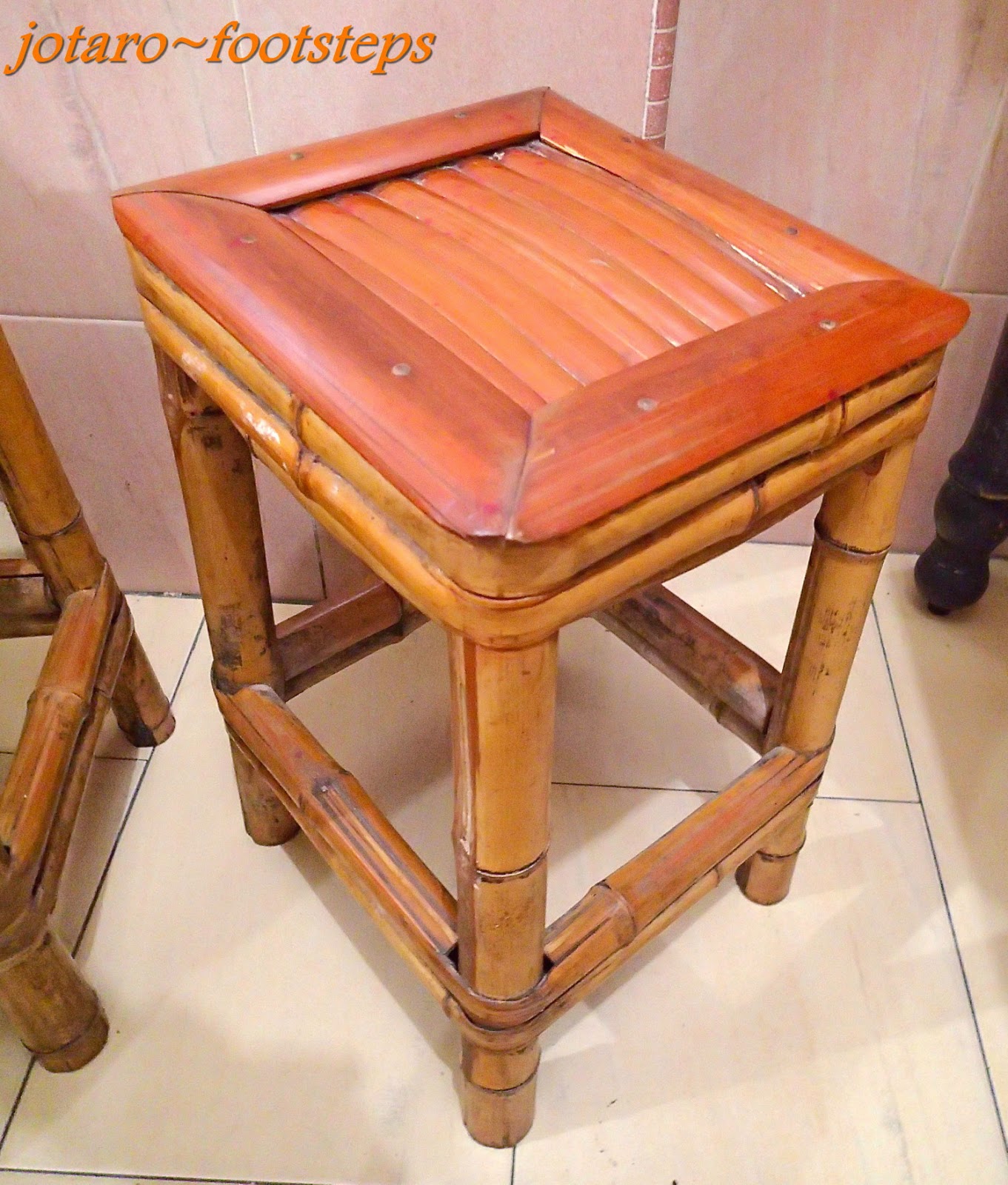 You see, other than enjoying the good Nyonya food here, one can also appreciate the many pieces of antiquities within the shop. And the best thing is that all the antiques are up for sale. Even these bamboo stools we were sitting on and the table we were eating from were up for sale!
 Don't expect to have a feast of Nyonya fare here, you won't fine those curries, chap chai soup (chop suey), etc. Other than Nyonya kueh, Teck Kee basically sells Nyonya desserts such as Bubur Chacha, Read Bean Soup, Gandum, etc. So this is a place more for tea-time treats.
 Having had breakfast earlier, we only tried some of the kueh. The whitish Woon Chai Kow (Small Bowl Kueh) had a light taste, slightly salty with a tinge of sweetness; the deep-fried prawns on top is the ingredient that gives it the flavour.
 Their Bubur Chacha was not as sweet as I would have expected, perhaps these days people are more careful about their sugar intake. The orangeish sweet potato chunks added some colour to what would otherwise be a plain looking dish, whilst the yam was good, powdery bite-able. Overall the this Bubur Chacha was okay only, but good enough bring out the lilt mood to do a Cha Cha dance.
 Wow! Nice Red Agar-agar Jelly with spots of Selasih (Basil) seed - sweet with the Selasih adding some slight sourness to it.
 This being the Kow Ong Eah Festival (Nine Emperor Gods) prayer period, the Teluk Intan Chee Cheong Fun was the vegetarian variety. They tasted quite bland when compared to those from Liew Kee, but I guess that's what vegetarian food during this festival is abut, it's a period of a non-meat diet to cleanse one's soul for the purity of the praying. At other times, the Chee Cheong Fun sold here is from Liew Kee.
 The kitchen has see-through glass walls, where a helper can be seen rolling out Nyonya Curry Puffs pastry.
 In another corner of the shop, another helper is rolling out pastry for making "Ang Koo" steamed buns.
 In between the dining tables, the shops shelves and cupboards are filled with antiques. On the wall to some can be seen hanging in between old photos.
 A closer look at the red/black rattan-weave Nyonya Tiffin Carrier, this one is a larger type.
 An old antique clock with Roman numerals.
 Old Red Glass Oil Lamps, a Victorian Painting of a lady, an old photo of the Teluk Intan Leaning Clock Tower.
 Up on high wall shelves are bottles of drinks from different era, all still with their contents.
 Old photos and posters dot the walls.
 Old black & white wedding photos. Look closely now, perhaps one of your relatives are in these photos.
 Sitting on an old electronic organ: old Chinese comics and an old F&N orange crush metal plate advertisement poster.
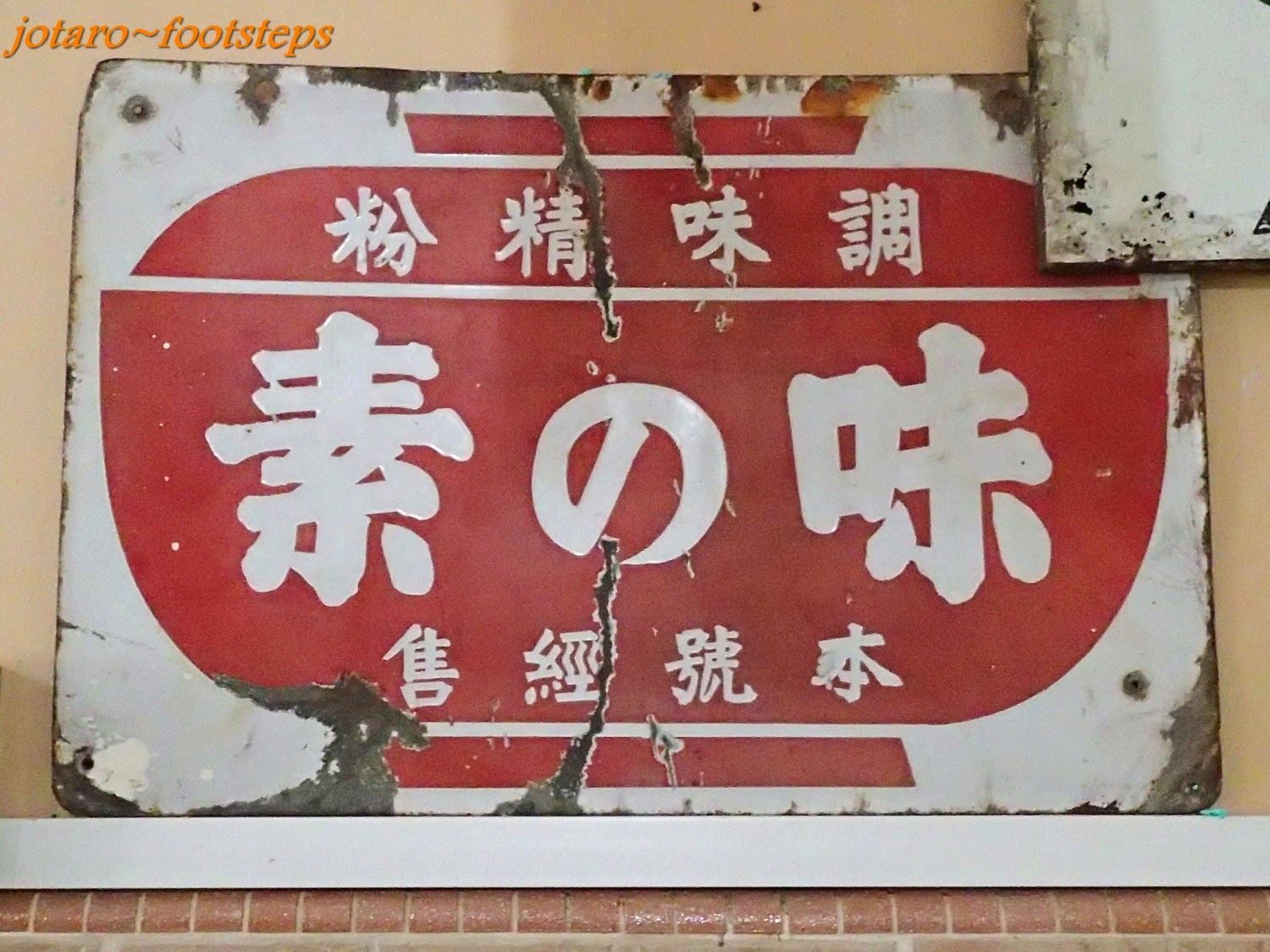 An old Aji-na-moto advertisement poster.
 Old advertisement poster for "Eley-Kynoch" catridges.
 An old Rose Wood antique divan put to good use while waiting to be sold.
 The carved eagle crest of the Rose Wood antique divan.
 Glazed Chinese earthenware pot with bird design.
 Bust of Buddha.
 A Laughing Buddha statue.
 TECK KEE FOODSTUFF ENTERPRISE


